
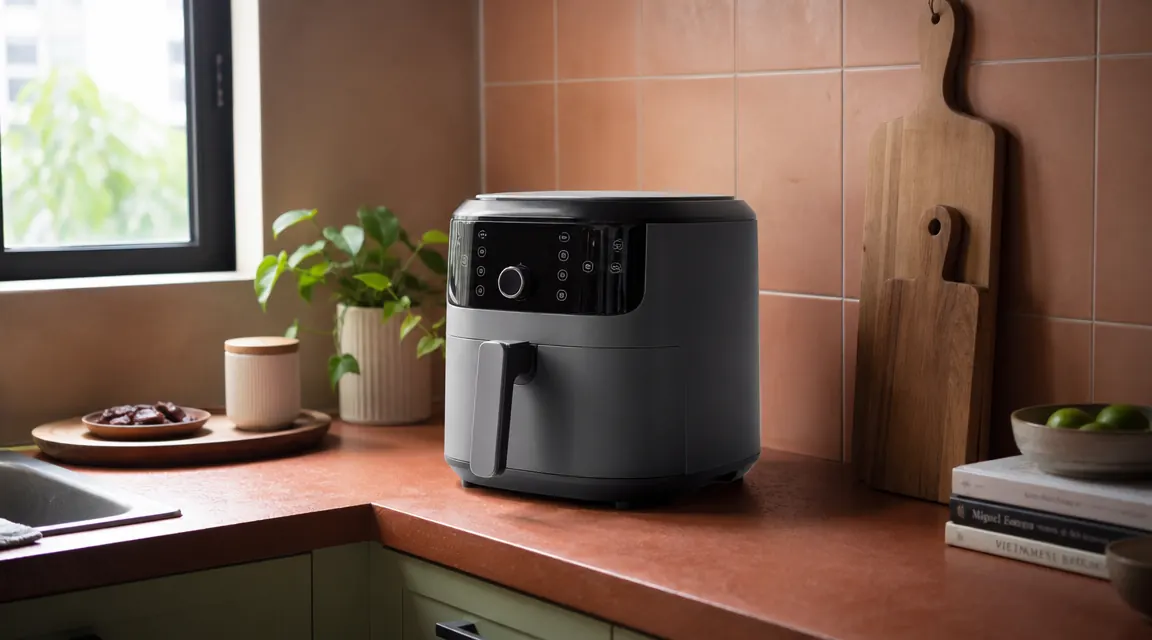
Let me tell you the thing that bothered me the first morning I used the Ninja AF101. I was making toast-level breakfast at 6:15am in my studio apartment. I set the fryer to 390 degrees, hit start, and the fan kicked on. My neighbor's cat probably heard it. That fan is not quiet. Nobody in those glossy five-star Amazon reviews mentioned that, and I wish someone had warned me before I committed to an appliance with real volume in a space where the kitchen and the bedroom are separated by about twelve feet.
I am not writing this to talk you out of the Ninja AF101, ASIN B07FDJMC9Q, which has over 90,000 reviews and a 4.7-star average for very good reasons. I am writing it because I spent three weeks reading reviews before I bought mine, and almost none of them told me about the noise, the basket-capacity reality, the quirky drawer behavior, or the one technique that fixed every disappointing result I had in the first month. This review covers what those other reviews skipped.
The Quick Verdict
A genuinely excellent compact air fryer with a real learning curve, a noisy fan, and a 4-quart basket that fits less than you might expect. Worth every inch of counter space once you understand its quirks.
Amazon Check Today's Price →If your oven takes 15 minutes to preheat and costs you counter space, the Ninja AF101 is the fix.
Check the current price on Amazon and see whether it ships to you today.
Amazon Check Today's Price on Amazon →The Fan Noise: Louder Than Reviewers Admit
I measured the Ninja AF101 fan noise with a free decibel app on my phone while it ran at 400 degrees. It came in consistently around 65 decibels from three feet away. That is roughly the volume of a normal conversation, or a box fan on medium. On its own that does not sound alarming, but context matters. In a studio or one-bedroom apartment, that fan runs right next to the space where you are eating, working, or watching television. In a kitchen that opens directly into a living room, which describes most apartments under 700 square feet, you will hear it the entire time something is cooking.
This is not a dealbreaker, but it is the thing nobody prepares you for. If you are accustomed to a gas range where you can walk away and come back, the air fryer demands you stay somewhat nearby because the fan is a constant reminder it is running. If you have a roommate who sleeps late, early morning air frying will have consequences. If you live alone and the noise does not bother you, move right past this section. But if quiet mornings matter to your household, factor this in before buying.
The Basket Capacity: 4 Quarts Sounds Bigger Than It Is
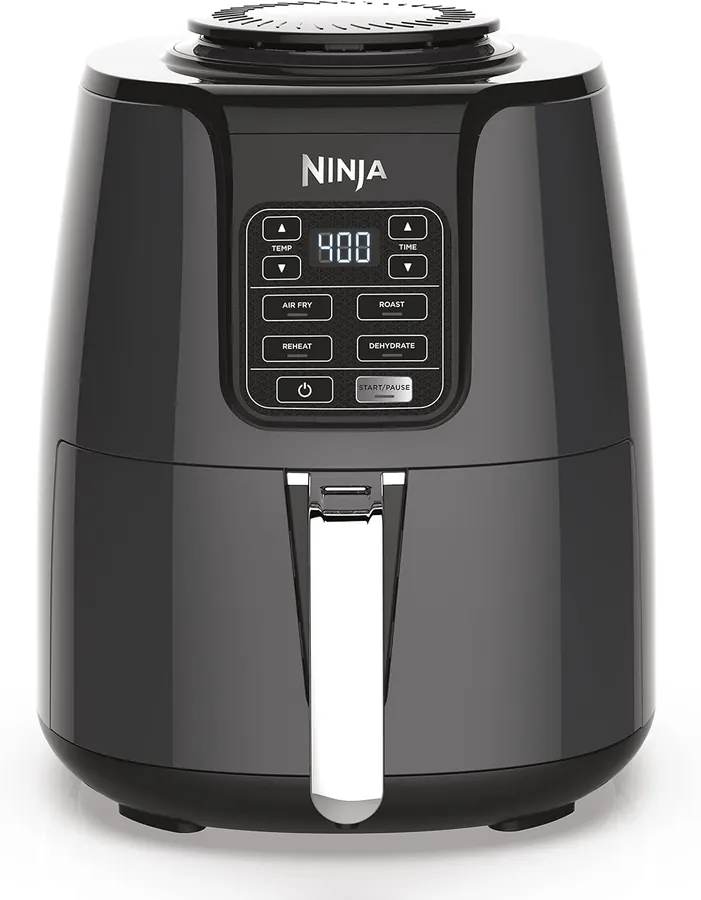
Four quarts. That number is on the box, on the Amazon listing, in every review. What is not on the box is that the usable cooking surface inside that basket is roughly 8 inches in diameter, and the basket itself is round, not square. That means the effective cooking area for a single layer of food is somewhere close to 50 square inches. For comparison, a standard quarter-sheet pan is about 108 square inches.
What this means in practice: six chicken wings in a single layer, maximum. Four medium salmon fillets, snug. About two servings of frozen french fries if you want them actually crispy rather than steamed on top of each other. The AF101 will technically hold more food than that, but if you pile it in, you lose the hot circulating air that makes air frying work. You get steamed food with a crispy bottom layer and a soggy top. I learned this the hard way with a batch of Brussels sprouts that came out exactly as described.
For one person cooking one meal at a time, the basket size is perfect. For two people eating together, you will cook in two batches for most proteins. For a family of three or four, this is not the fryer you want. That is not a criticism, it is just honest sizing math that the marketing materials tend to soft-pedal.
The Drawer Wobble and What It Actually Means
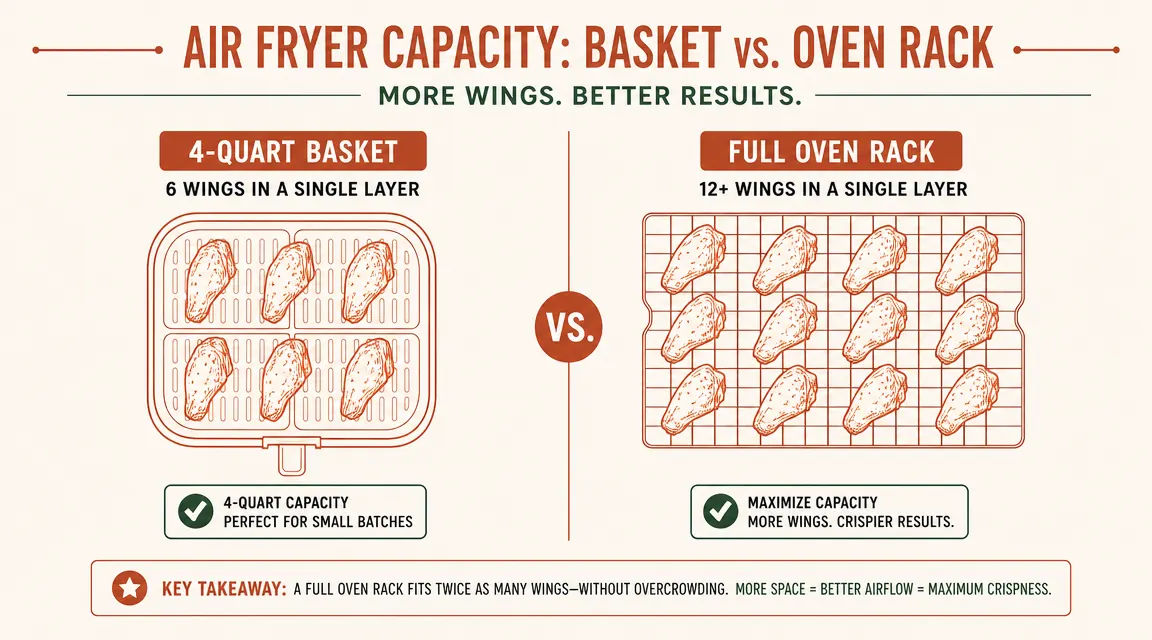
Pull out the Ninja AF101's basket drawer and you will notice it has a slight lateral wobble when fully extended. Not a collapse, not a structural failure, just a small amount of side-to-side play in the slide mechanism. I spent about ten minutes convinced I had received a defective unit before I read enough forum threads to understand that this is standard across the product line. It does not affect cooking. The basket locks in when inserted and stays locked during the entire cook cycle. The wobble is only present when the drawer is pulled out to add or flip food.
Why does this matter enough to mention? Because I have seen one-star reviews that cite this exact thing as a reason the product is broken. It is not broken. But if you are the kind of person who reads a manual and expects tight mechanical tolerances on a sub-$100 appliance, the wobble will bother you for about a week before you stop noticing it. I mention it here so you do not panic the first time you pull the drawer out and feel it move.
The basket wobbles when you pull it out. Every unit does this. It locks solid when you push it back in. I spent ten minutes convinced I had a defective fryer before I figured that out.
Preheating: The Step the Instructions Barely Mention
The Ninja AF101 does not have a preheat button or a preheat indicator. The instruction manual says, in a small font callout, that you may want to preheat for three minutes before adding food. Most people skip this step because the fryer starts so quickly that it feels like it is ready immediately.
Skipping preheat is the single most common reason people get disappointing results in the first month of ownership. Frozen foods dropped into a cold basket start with a steaming phase before the crisping phase ever starts. That is why your frozen fries are limp on the bottom and why your reheated pizza crust is chewy instead of snappy. I ran two identical batches of frozen tater tots, one with a three-minute preheat at 400 degrees and one without. The preheated batch was noticeably crispier with a better texture on the outside. Three minutes. That is the whole fix.
Set the fryer to your target temperature, run it for three minutes with the empty basket inside, then add your food. The fryer will keep counting down from its original set time during the preheat if you do it this way, so just add three minutes to your intended cook time when you set it. Once you build this into your routine it becomes automatic, and your results will be consistently better than anything you read in a review that skipped this.
The Nonstick Basket: How Long It Actually Holds Up
The Ninja AF101's basket and crisper plate both have a nonstick coating. This coating is doing real work every day at high heat, and how long it lasts depends almost entirely on how you clean it. I have seen Amazon comments from people who say the coating started peeling after four months. I have also seen people report two-plus years of daily use with no issues. The difference, almost universally, comes down to two things: whether they used metal utensils in the basket, and whether they ran it through the dishwasher regularly.
Ninja says the basket and crisper plate are dishwasher-safe, and technically they are. But repeated dishwasher cycles accelerate the breakdown of the nonstick coating faster than hand washing does. The basket is small enough that washing it by hand takes about ninety seconds. Warm water, a soft sponge, a little dish soap, done. Avoid anything abrasive, avoid metal, and avoid the dishwasher if you want that coating to last. This is the maintenance tip that does not appear on the product listing and would have saved me a fair amount of anxiety in the first few months.
The Temperature Accuracy Question
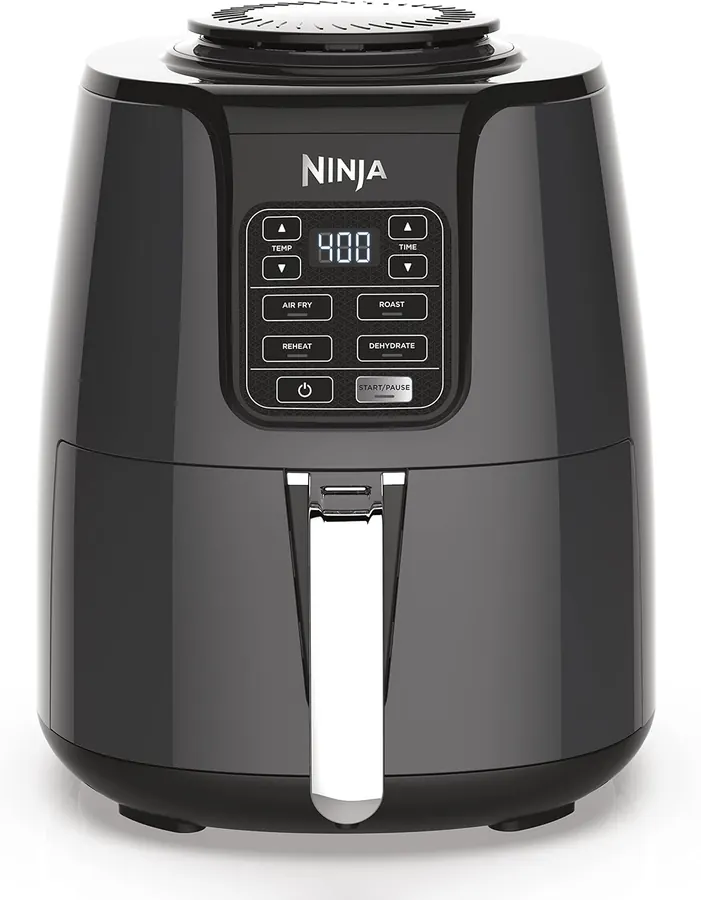
The Ninja AF101 runs in 5-degree increments from 105 to 400 degrees Fahrenheit. I tested the interior temperature with a small oven thermometer placed on the crisper plate after a three-minute preheat. At the 400-degree setting, the actual temperature read between 385 and 410 degrees depending on where in the cook cycle I checked it. This is normal cycling behavior for any small appliance with a thermostat. It is not precise like a laboratory oven. It is consistent enough that once you cook something once with a given time and temperature, you can repeat it reliably.
The 105-degree setting, marketed as a dehydrate-low function, does run meaningfully lower than standard air fry temps. I use it for dehydrating apple slices and making beef jerky strips, and it performs well for both. The fan runs continuously at all temperatures, which is what moves the air and does the work. If you buy this expecting it to hold a steady 400 degrees like a countertop convection oven, you will be slightly disappointed. If you expect it to perform like an air fryer, which circulates hot air with normal thermal cycling, it will meet that expectation.
What I Liked
- Genuinely compact footprint at 11.1 x 11.1 x 12.5 inches, fits tight corners
- 4.7-star average across 90,000-plus reviews signals broad real-world satisfaction
- Preheats functionally in three minutes versus 15 for a full oven
- Crisper plate elevates food for air circulation on all sides, not just bottom
- Four cooking functions on one dial: air fry, roast, reheat, dehydrate
- Basket and crisper plate are non-stick and easy to hand-wash in 90 seconds
- Runs at 1550 watts, cooks fast without heating up the whole kitchen in summer
Where It Falls Short
- Fan noise is real and present for the entire cook time, roughly 65 decibels
- Drawer has lateral wobble when fully extended, feels loose though it cooks fine
- 4-quart round basket holds less single-layer food than the size number suggests
- No preheat indicator or button requires manual timing habit to get best results
- Nonstick coating degrades faster with dishwasher use than hand washing
- No digital display, analog dial only, which some cooks find harder to set precisely
Who This Is For
The Ninja AF101 is genuinely well-suited to anyone cooking for one or two people in a kitchen where counter inches are the limiting resource. If you regularly cook proteins, reheat leftovers, or make frozen foods and you want crispy results without turning on a full oven, this fryer will earn its footprint quickly. It is also a good choice if you live somewhere that gets hot in summer and you have been avoiding the oven for months at a time. Running the air fryer at 400 degrees does not raise the room temperature the way a full oven does, and that difference is noticeable in a studio apartment.
It is also a good fit for anyone who wants to dehydrate fruit or make jerky on a small scale without buying a dedicated dehydrator that takes up twice as much space. The low-temperature fan function does that job acceptably. You will not be producing commercial quantities, but for a weekend hobby batch of dried mango or venison strips, it works.
Who Should Skip It
If you are cooking for three or four people regularly, look at the Ninja AF161 or the Cosori 5.8-quart before buying this one. The 4-quart round basket will frustrate you with batch cooking if you are trying to feed a full table. It is not that the AF101 cannot do it, it is that you will cook three rounds of chicken thighs for a family of four and spend more time managing the fryer than you would have spent just using the oven.
If noise is a genuine sensitivity issue in your living situation, whether because of sleeping schedules, shared walls in an apartment building, or a health reason, test an air fryer at a store if you can before committing. The fan volume on the AF101 is not unusual for this category. Most compact air fryers run a similar fan noise profile. If that is a dealbreaker, the category itself may not be the right fit rather than this specific model.
Now that you know the quirks, the question is whether the Ninja AF101 fits how you cook.
Check the current price on Amazon. It ships quickly and the return window gives you time to decide if the fan noise works for your kitchen situation.
Amazon Check Today's Price on Amazon →