

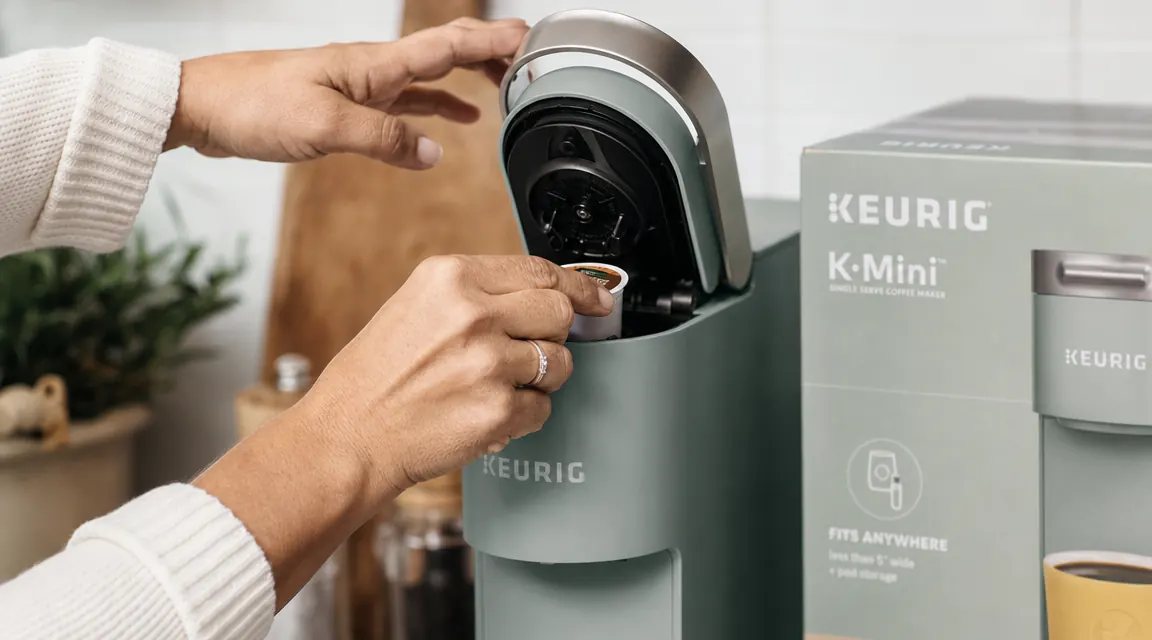
My kitchen counter is 22 inches of usable workspace between the sink and the cabinet corner. I am not exaggerating. I have measured it more than once because every appliance that goes up there is a negotiation. So when I decided to replace my old 12-cup drip machine about six months ago, the Keurig K-Mini was the first thing I looked at. Five inches wide. That is narrower than my paper towel holder. I ordered it on a Tuesday and by Wednesday morning I had already brewed my first cup. That was roughly 180 cups ago, and I feel like I finally have enough of a track record to tell you something useful.
I want to be upfront with you: I am a two-cup-a-morning person who lives alone, cooks mostly for herself, and has strong opinions about counter real estate. If you brew coffee for four people before 7 a.m., this machine is simply not built for your morning. But if you are a single-cup household in a small kitchen who just wants a good, hot cup without fussing with filters or measuring scoops, keep reading. I think this review will be useful to you.
The Quick Verdict
A genuinely compact single-serve machine that earns its five-inch footprint for solo coffee drinkers, though the fill-per-cup reservoir and modest brew speed mean you will adjust your morning rhythm to suit it.
Amazon Check Today's Price →If your counter is short on inches and your patience for 12-cup leftovers has run out, the K-Mini is worth a look.
Over 107,000 Amazon reviews back up what Sandra found: it is reliable, it is genuinely small, and it brews a decent cup. Check today's price before it changes.
Amazon Check Today's Price on Amazon →How I Have Been Using It
For the first month, I used the K-Mini strictly with store-brand K-Cups I already had in the pantry. Two cups every morning, about an hour apart. I brew at the 8-ounce setting for the first cup and the 10-ounce setting for the second, because by mid-morning I want something a little milder and I am not fussy about temperature the way I am first thing. That workflow has been consistent for six months now, which means I have run this machine through roughly 360 brew cycles. No clogs, no leaks, no error lights.
Around month two I started using a reusable K-Cup filter so I could brew my preferred ground coffee instead of relying on pods. The K-Mini accepts any standard reusable pod, and I found a simple stainless one for about eight dollars that has worked well. It does require rinsing after each use, which adds about 30 seconds to my routine, but the coffee tastes noticeably better to me than most pre-filled pods, so that tradeoff is worth it. If pods work fine for you, you do not need to bother with this.
One adjustment the machine forced on me right away: there is no water reservoir in the traditional sense. You fill a small tank at the back before each brew, or you can fill a travel mug with water and pour directly into the top. The tank holds enough for one cup. Full stop. If you want a second cup immediately, you fill it again. I do not find this annoying anymore, but I want you to know it going in because some people genuinely mind it. It is the single biggest difference between this machine and the larger Keurig models.
Brew Quality Over Six Months
The K-Mini brews at around 192 degrees Fahrenheit according to several sources I have seen, which is slightly below the coffee-nerd ideal of 200 degrees. In practice, what this means is that your coffee will taste a little less extracted than a pour-over or a French press. With a lighter roast pod it can taste thin. With a medium or dark roast at the 8-ounce setting, I find it perfectly acceptable, sometimes quite good.
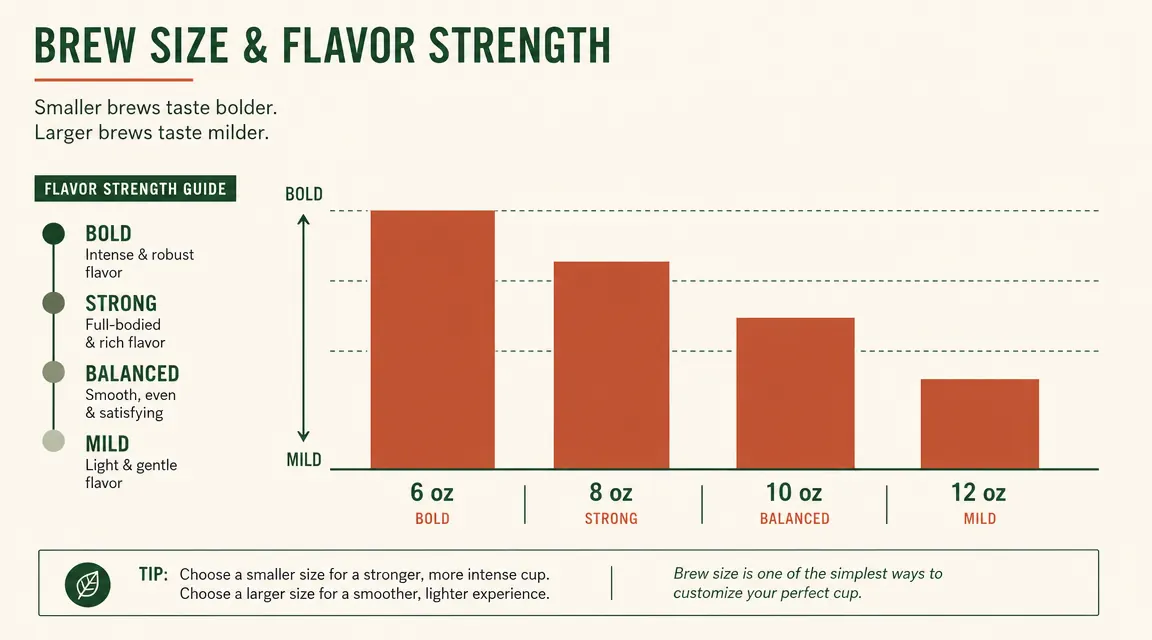
The key variable is brew size. The K-Mini goes from 6 ounces up to 12. At 6 ounces you get a concentrated, stronger shot that is almost espresso-adjacent for certain dark roast pods. At 12 ounces you get something approaching weak diner coffee, and I would not recommend it unless you are cutting the coffee with a lot of creamer anyway. I have settled on 8 ounces as my daily setting and it produces a cup that I am happy to drink without complaint most mornings.
Month three I noticed a very faint mineral taste some mornings, which is a signal that the machine needed descaling. Keurig recommends descaling every three to six months depending on water hardness. I have city tap water and mine needed it right around the 90-day mark. The process takes about 45 minutes using Keurig's descaling solution, which you can find on Amazon or in any grocery store. After descaling, the mineral taste was gone and I noticed the brew ran a little faster too. Put a reminder on your phone for three months from the day you set it up.
The Footprint and Counter Presence
The advertised dimensions are 4.5 inches wide, 11.3 inches deep, and 12.1 inches tall. I measured my unit and those numbers are accurate. The depth is the thing to pay attention to: almost 12 inches means it sits well back from the counter edge, and if your upper cabinets are close to the counter, you need to check that you have enough clearance to open the brew head. Mine has about 16 inches between the countertop and the cabinet above it, which is comfortable. If you have 13 inches or less of clearance, measure before you buy.
The cord is about 2.5 feet long and can be wrapped around a built-in cord storage slot on the base. I use this feature every day because my nearest outlet is on the backsplash and a long dangling cord in a small kitchen is a genuine annoyance. Having the cord storage is one of those small-design-decisions that tells you the people who designed this machine were at least thinking about compact spaces.
What Surprised Me After Six Months
The brew speed is slower than I expected. From cold start, with the machine already warmed up, a cup takes about two minutes. That is not slow by coffee-maker standards, but Keurig's larger models with a heated reservoir are faster because the water is already near temperature. The K-Mini heats from room temperature every time. If you have a strict morning schedule, you will want to push the brew button before you do other things, not stand there waiting.
I did not expect to appreciate the cord storage as much as I do. In a kitchen where outlets are scarce and counter clutter builds up fast, that little detail matters more than it sounds.
The auto-off feature activates 90 seconds after brewing, which I appreciate. A few times I have walked away from the machine without thinking about it and come back to find it off. In a small apartment where I am often doing three things at once in the kitchen, not having to remember to turn off the coffee maker is a small relief. It is not a safety issue with a machine this size, but it reduces the mental overhead.
Cleaning is simpler than I expected. The drip tray and the water reservoir both lift out and rinse under the tap. There are no hidden parts that accumulate gunk in hard-to-reach places. The brew needle occasionally needs a quick poke with a paperclip to clear a clog if you use very fine-ground coffee in a reusable pod, but I have only had to do that twice in six months. For a machine this size, cleaning is genuinely low effort.
Alternatives I Considered
Before settling on the K-Mini, I looked seriously at two other options. The Hamilton Beach single-serve brewer is similar in footprint and costs less, but the reviews I read pointed to inconsistent brew temperatures and a lid that several people described as prone to dripping. I did not test it personally, but the pattern of complaints across reviews was consistent enough that I chose to spend more for the Keurig brand reliability. You can read my full side-by-side in the Keurig K-Mini vs Hamilton Beach comparison if you want those details.
I also considered the Keurig K-Slim, which is slightly taller and has a 46-ounce removable reservoir, meaning you do not have to fill it for every cup. The trade-off is that the K-Slim is 3.3 inches wide versus the K-Mini's 4.5 inches, and actually costs more. If the fill-per-cup thing sounds like it will bother you in practice, it is worth considering. For me, the lower price and the cord storage on the K-Mini tipped me toward this one.
What I Liked
- Genuinely slim profile at 4.5 inches wide, the smallest single-serve machine I have found at this price
- Cord storage wraps the cord neatly around the base, a detail that matters in small kitchens with limited outlets
- Works with any standard K-Cup pod plus off-brand reusable filters
- Auto-off after 90 seconds removes one item from your mental morning checklist
- Drip tray and reservoir are both removable and rinse-clean quickly
- 107,000-plus Amazon reviews suggest broad reliability across many households
Where It Falls Short
- Fill-per-cup reservoir means refilling for every single brew, which will annoy some people
- Brew speed is slower than larger Keurig models because it heats from cold each time
- Needs descaling every 90 days with city tap water, which takes about 45 minutes
- At 12 ounces the coffee tastes thin; stick to 8 ounces or fewer for best results
- No temperature control and no strength setting beyond choosing a smaller brew size
Who This Is For
This machine is built for one-cup households in small kitchens, and it does that job well. If you live alone or you are the only coffee drinker in your home, the fill-per-cup design is not a problem because you are filling it once and walking away. It is also a good fit for someone who wants to brew single cups of different varieties without a pot sitting on the burner getting stale. I know people who keep a box of regular pods and a box of a flavored variety and use whichever suits their mood that morning. That is exactly the scenario where single-serve shines.
It is also a reasonable choice for people who are new to single-serve brewing and are not sure if they want to spend more on a machine with a larger reservoir. The K-Mini gives you the Keurig brewing experience at the lowest price point in the K-series line. If you like it, you know the upgrade path. If you decide single-serve is not for you, you have not spent a fortune finding that out. There are 10 more reasons the single-serve format suits small kitchens in my roundup of single-serve benefits, if you want to think it through more before deciding.
Who Should Skip It
If you share a kitchen with two or more coffee drinkers who all want coffee within a short window in the morning, the K-Mini will create a bottleneck. You are looking at two minutes per cup, plus refilling the reservoir each time. For a household of four people, that is a real problem at 7 a.m. on a weekday. In that case, a machine with a larger reservoir or a traditional drip maker will serve your household better. The K-Mini is designed for a single person brewing one or two cups in sequence, not for serving a small crowd.
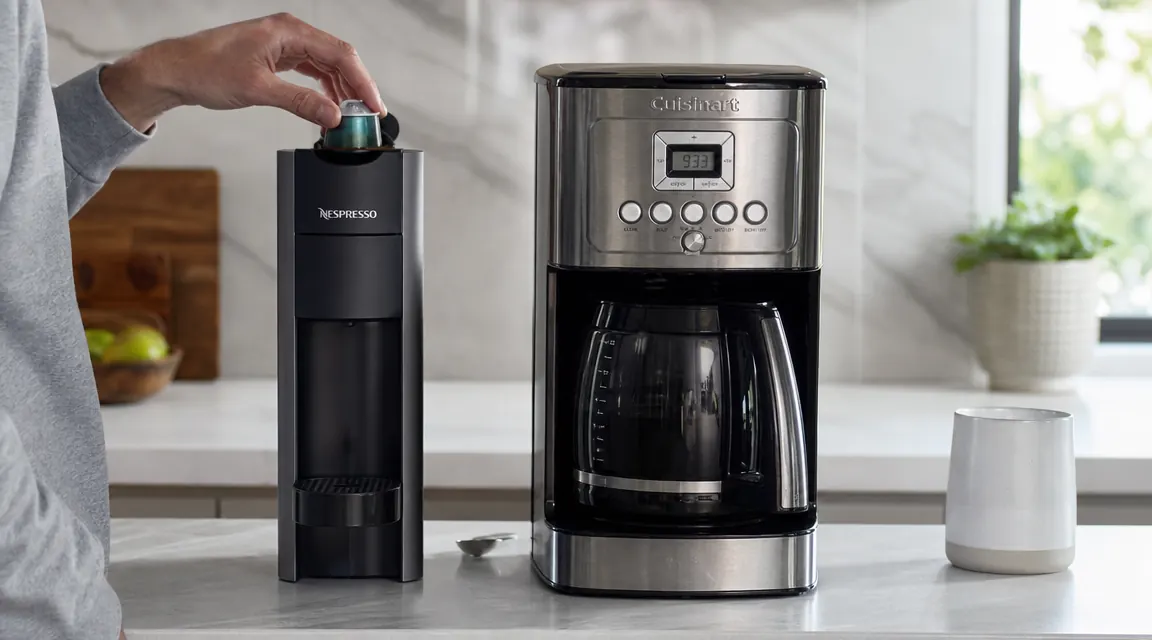
I would also steer away from it if coffee quality is a top priority for you and you are willing to invest time in the process. A pour-over setup or a small French press will produce a better-tasting cup than any pod machine at any price. The K-Mini's value is in convenience and footprint, not in extracting the absolute best from your beans. It is a morning routine appliance, not a coffee hobby appliance. Know which one you are buying.
After 180 cups in a tiny galley kitchen, it is still earning its five inches of counter space every morning.
The Keurig K-Mini has been reliable, easy to clean, and genuinely compact for six months of daily use. If that sounds like what you need, check today's price on Amazon.
Amazon Check Today's Price on Amazon →